
AI won't fix your marketing until you fix your foundations.
AI is transforming how quickly marketers can work, but it cannot replace the clarity that only strategy provides. If you haven’t defined your audience, your position and your story, HubSpot’s new tools will simply help you go faster in the wrong direction.
After spending several days at INBOUND, absorbing everything HubSpot is releasing for the AI era, I came home both impressed and energised. The platform is moving quickly. The tools are getting smarter. And for the first time in a long time, it feels like marketing teams can genuinely work at the pace they’ve always hoped for.
But the more I explored HubSpot’s new capabilities, the clearer one message became: AI cannot fix what hasn’t been defined. If your audience is vague, your data is unreliable, or your positioning is unclear, AI will not resolve those issues. It will simply move faster through the wrong work.
This is the part nobody likes hearing, but every marketer recognises when they’re honest with themselves. For years, we’ve relied on automation that was bolted together, workflows that weren’t always elegant, and CRM data that we tolerated even when it wasn’t something we trusted. That friction has consequences. It damages the integrity of reports, it strains the relationship between marketing and sales, and it undermines confidence in the numbers we present to leadership. When your foundations aren’t strong, your entire marketing effort starts to feel unstable.
Before you automate anything, articulate everything.
This is why the Define stage in our Own the Space methodology resonated so strongly with what I heard at INBOUND. Before you automate anything, you need to articulate everything. You need to know the market space you want to occupy, the audience you’re trying to reach, and the story you’re trying to tell. Without that, AI will only generate something generic, something that looks like everyone else’s content, because it’s based on the same vague inputs everyone else is feeding the system.
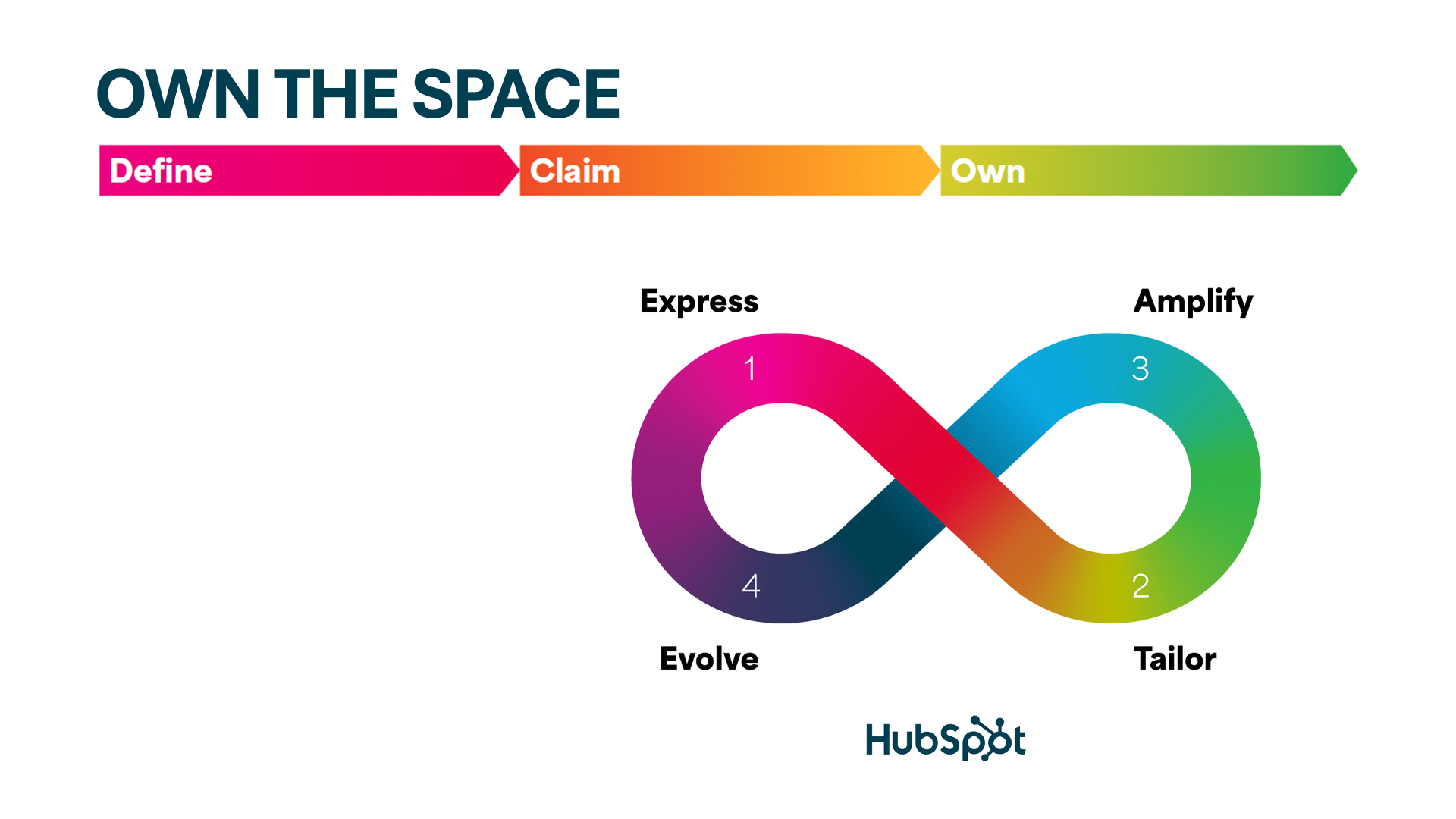
During the webinar, I found myself returning to this point again and again. You cannot outsource clarity to AI. HubSpot’s new Loop Marketing structure is powerful. It helps you express, tailor, amplify and evolve your message at speed. But it assumes you already know what the message is. And it assumes your data reflects the reality of your audience. When those foundations are missing, the loop doesn’t accelerate progress; it accelerates the noise.
Data enrichment is a good example of this. The tools HubSpot has introduced make it easier than ever to fill in gaps, update properties and build confidence in your dataset. But enrichment only matters if you already understand what information is meaningful. You have to imagine the kind of data you need in order to run campaigns that make sense. Without that intention, you’re simply tidying a database without changing the quality of decisions that come from it.
Segmentation follows the same pattern. HubSpot’s new dynamic segments are a massive leap forward. They allow you to build real-time views of your audience, understand where engagement is coming from and adjust your marketing accordingly. But again, segmentation is only effective when you’ve already defined your ideal customer and the space you intend to claim in the market. A beautifully segmented list of the wrong people won’t get you any closer to growth.
One of the questions I was asked during the session was which of the five plays I consider most important. My answer was simple: the first one. Direct. Understanding your audience. Knowing the space you want to own. Creating clarity around who you’re trying to reach and why. Because everything else you do - enrichment, monitoring, scaling and acting on intent - only works if that first play is sound. If you skip the foundations, every automated decision downstream becomes compromised.

This is the reality of AI-enabled marketing. The tools are powerful. The speed is extraordinary. But AI does not give you direction. It only accelerates the direction you’ve chosen. And if you haven’t chosen one, AI will move quickly, but not meaningfully.
That’s why Own the Space matters more now than ever. It gives you a deliberate position to build from. It stops you blending into the noise. It ensures your story is distinct at a time when AI is making everything easier to produce and harder to differentiate. Once the foundation is set, HubSpot becomes a genuinely transformational tool. Segmentation becomes insightful. Enrichment becomes strategic. CRM views become valuable. Marketing Studio becomes scalable. Intent signals become actionable. The whole system starts working together.
But none of that happens by skipping to the automation. It happens by doing the work that comes before it.
AI gives everyone speed. Strategy gives that speed purpose.
And the brands that combine the two will be the ones that win the next chapter of B2B marketing.